 bitsepi@gmail.com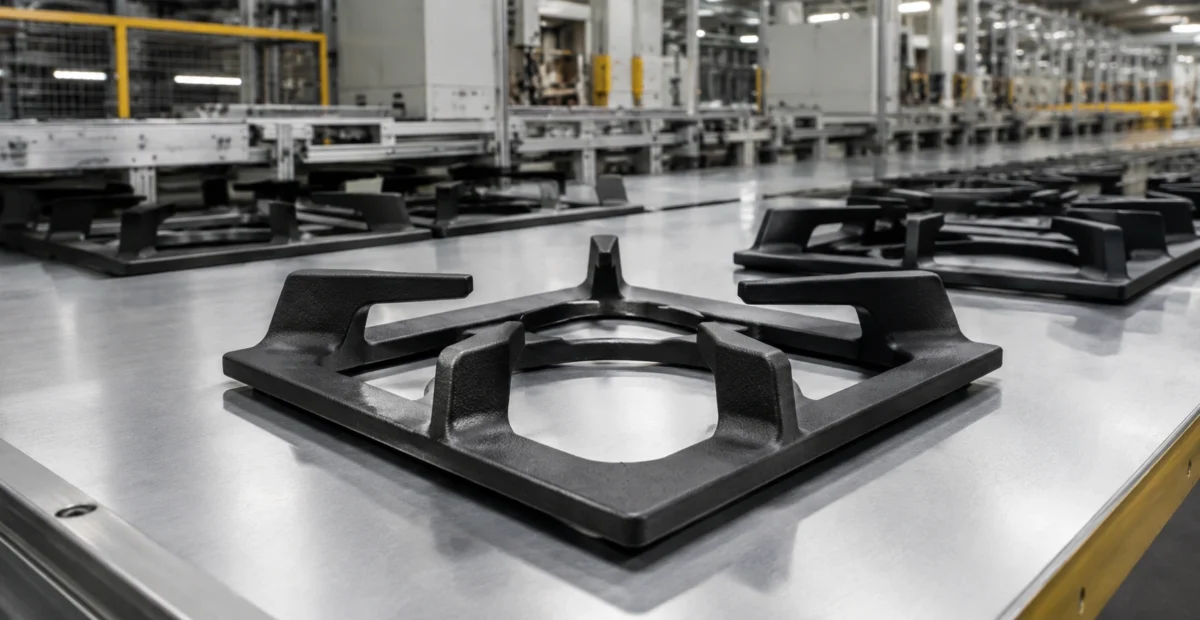
Cast iron grates are among the most visible components of many gas cooktops. In addition to supporting cookware and operating around repeated heating, the component must have a surface and appearance suitable for a finished home appliance.
Enamelling is one of the surface finishing methods used for cast iron appliance components. But what exactly is enamelled cast iron, why is it used and what should appliance manufacturers consider when specifying an enamelled component?
What is enamelled cast iron?
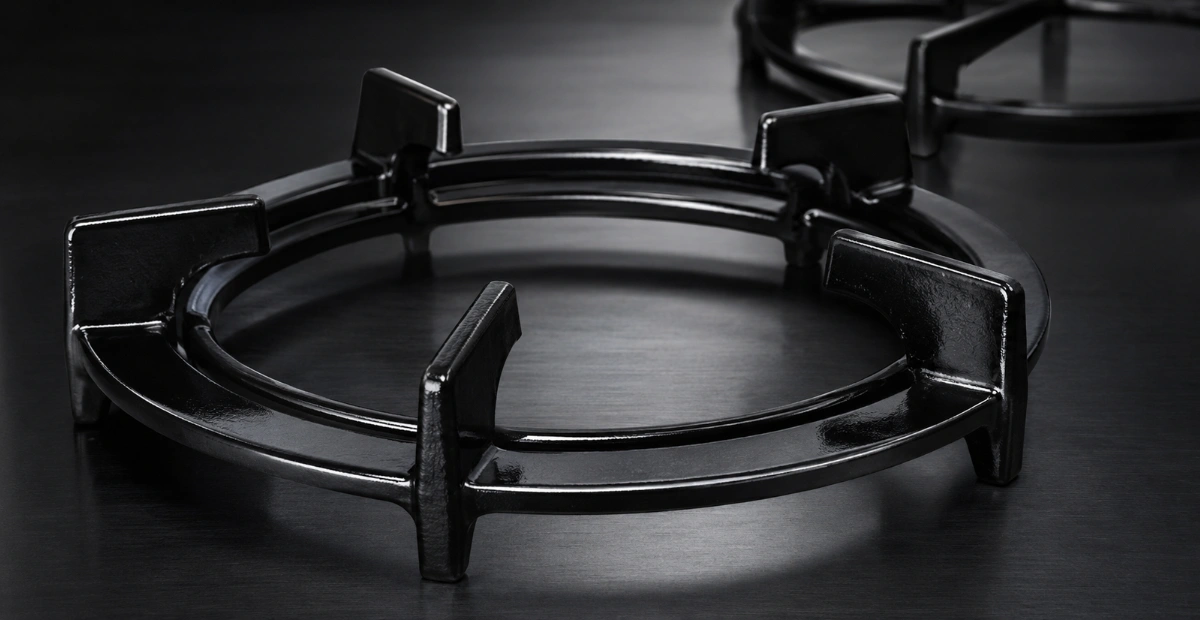
Enamelled cast iron is a cast iron component that receives an enamel coating after the base casting has been produced and appropriately prepared.
The coating becomes part of the finished visible surface of the component, which is why both the quality of the underlying casting and the quality of the coating process are important.
Why is cast iron used for gas stove grates?
A stove grate must support cookware, retain its intended geometry during normal use and fit correctly within the overall cooktop and burner design.
Cast iron allows relatively complex component shapes to be manufactured with the rigidity and mass suited to this type of application.
What does enamel add to a cast iron component?
A more controlled finished appearance
After casting and finishing, enamel can provide a more uniform final visual surface and help define the appearance of the component as part of the finished appliance.
Integration with appliance design
Home appliances are designed as complete visual products. Colour and surface appearance of the grate should therefore work with the cooktop’s overall design language.
Final surface finishing
Enamel should be considered part of a complete production process rather than a method for hiding poor base quality. The condition of the casting, grinding and surface preparation all influence the final result.
How is enamel applied to cast iron?
The exact process depends on the coating system and manufacturing method. In general, however, the casting is first cleaned, ground and prepared to create a suitable surface.
The coating is then applied and processed under the required conditions to form the final enamelled surface. Finished components are subsequently inspected.
Why is surface preparation important?
The final coating is applied directly to the prepared casting surface. Unwanted residue, contamination or poor finishing may therefore affect the final appearance.
Casting, grinding, cleaning, coating and inspection should consequently be treated as connected stages of one manufacturing route.
How is enamel quality inspected?
Coating uniformity
The coated areas are inspected for acceptable and consistent coverage.
Colour and appearance
Colour and overall visual quality are evaluated against the requirements established for the appliance.
Visible defects
The finished surface is checked for unacceptable visible irregularities.
Final dimensions and geometry
Inspection should not stop with appearance. Functional dimensions, geometry and contact points remain important after the surface finishing process.
What determines the quality of an enamelled casting?
- Quality of the original casting
- Correct component geometry
- Grinding and finishing quality
- Surface cleanliness and preparation
- Uniform coating application
- Controlled coating process
- Final visual and dimensional inspection
Why component design matters before enamelling
The quality of an enamelled grate begins at the component design stage. Section thicknesses, corners, intersections and contact points may influence casting, finishing and coating operations.
For custom projects, manufacturability should therefore be reviewed before volume production and the sample should be evaluated for geometry, assembly fit and final appearance.
What should be specified when ordering enamelled cast iron components?
- Technical drawing or reference sample
- Critical dimensions and tolerances
- Assembly and contact points
- Areas requiring coating
- Required colour
- Visual acceptance requirements
- Production volume
- Packing and transportation requirements
Prototype quality versus production quality
Industrial sourcing requires more than a good prototype. Appearance and dimensional quality need to remain consistent across the complete production order and subsequent repeat orders.
This is why process control and inspection throughout production are important when choosing an industrial supplier.
Care of enamelled cast iron grates
Cleaning and handling practices can influence the appearance of the grate over time. End users should follow the maintenance instructions provided by the appliance manufacturer and avoid cleaning methods that are not recommended for the specific surface.
Appliance manufacturers should prepare care instructions according to the actual characteristics of the grate and coating selected for their product.
Enamelled cast iron production at AALFA PLUS
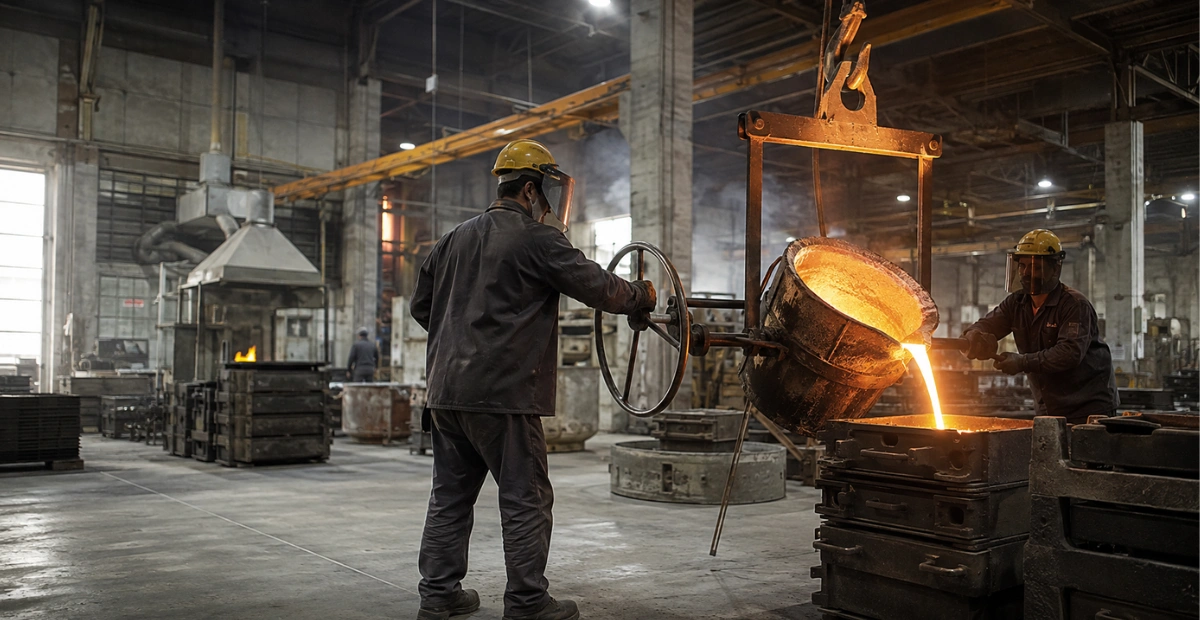
AALFA PLUS manufactures cast iron components for home appliance producers through a process that includes casting, grinding and finishing, enamelling and quality inspection.
Components are evaluated according to order-specific requirements covering dimensions, geometry, surface condition, finishing and coating appearance.
Existing grate models are available for evaluation, while custom components may also be reviewed from drawings, dimensions or physical samples.
Conclusion
Enamelled cast iron combines an engineered cast component with a controlled surface finishing process. A good result depends not only on the enamel itself but also on casting quality, geometry, grinding, preparation and final inspection.
For gas stove grates, functional, dimensional and visual requirements should therefore be considered as one complete specification.
Appliance manufacturers requiring standard or custom enamelled cast iron components can submit drawings, samples and technical requirements to AALFA PLUS for a production feasibility review.