 bitsepi@gmail.com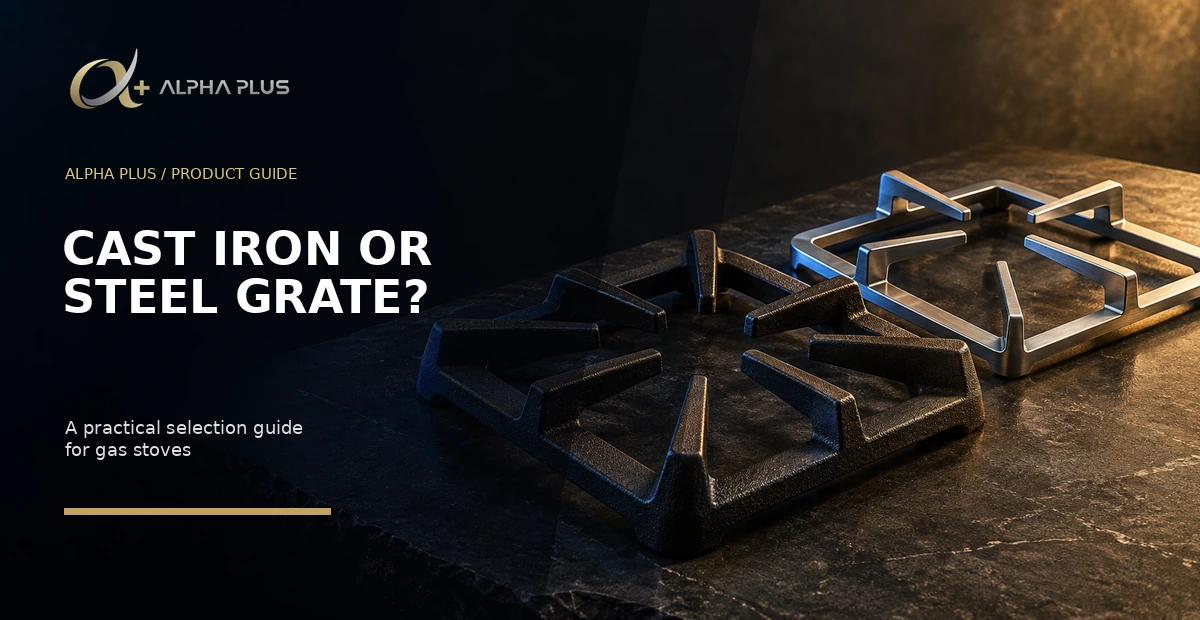
For appliance brands, buyers and product-development teams, the useful question is not “Which material is universally better?” It is “Which material, geometry, surface finish and manufacturing route fits this product’s use case?” This guide compares the decision factors without reducing the choice to appearance alone.
Start with the job the grate must do
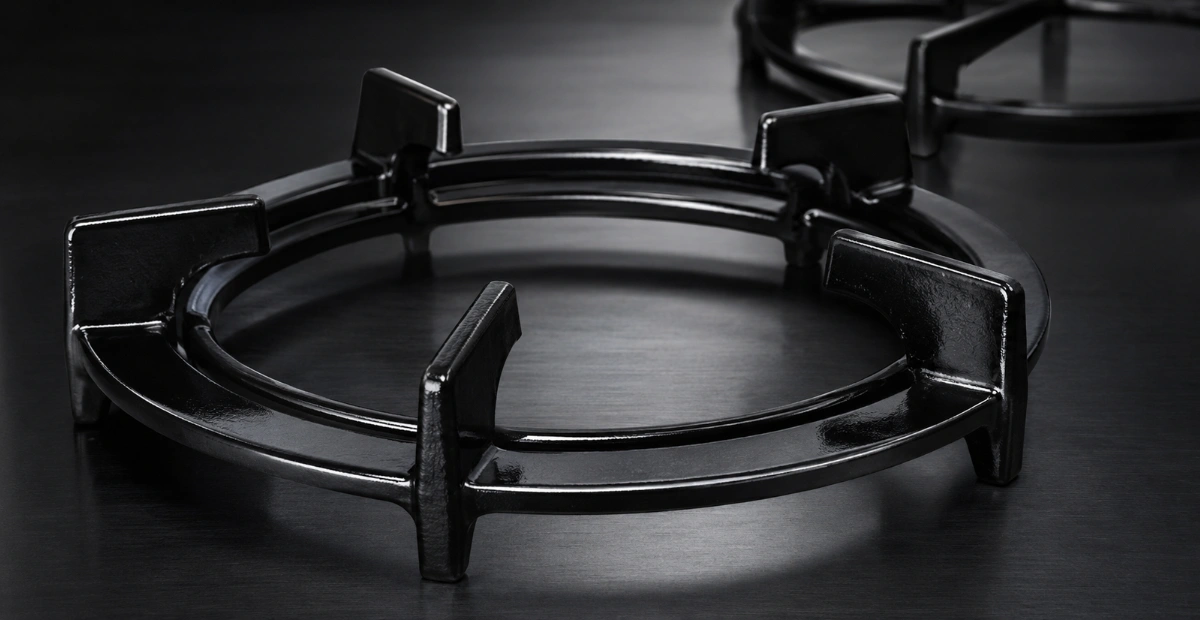
A grate creates a stable interface between the burner and cookware. It must support the expected pot sizes, preserve burner clearance, resist movement during normal use and integrate with the cooktop architecture. The geometry—leg position, rib profile, openings and contact points—often matters as much as the base material. A strong material cannot rescue a poor support design.
The same product may need different grate priorities in different market tiers. A compact domestic cooktop may prioritise clean appearance and efficient use of space. A premium appliance may prioritise visual mass, tactile quality and larger cookware support. Commercial or intensive-use environments may focus on robustness, replaceability and service access. The material decision should begin with these operating requirements.
Cast iron: thermal mass, geometry and visual presence
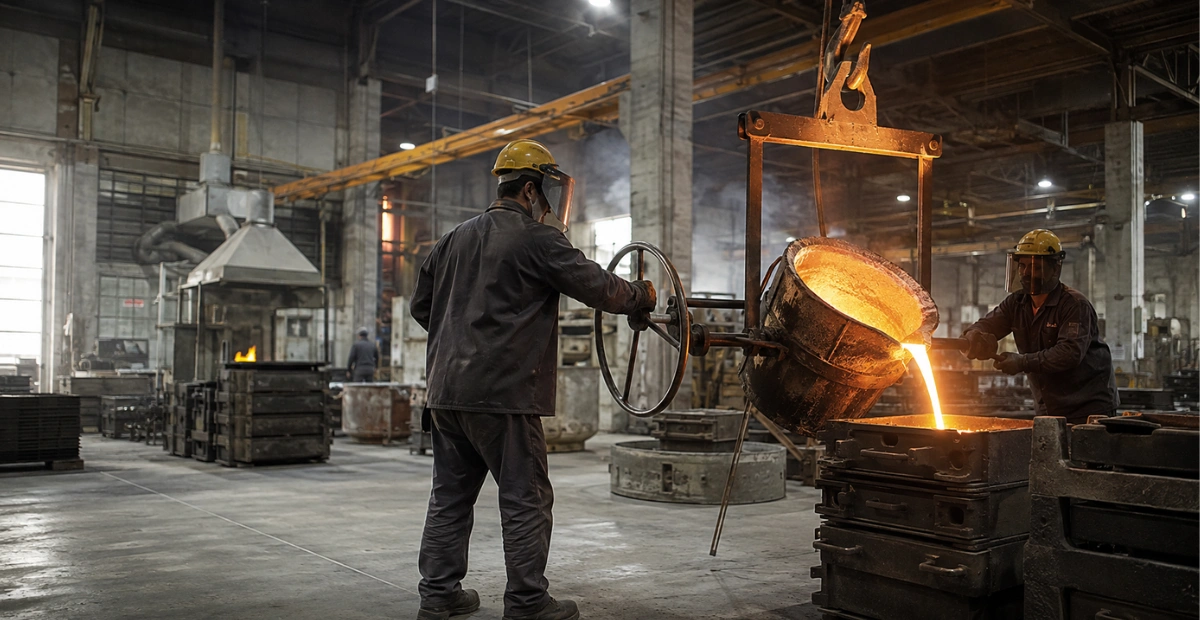
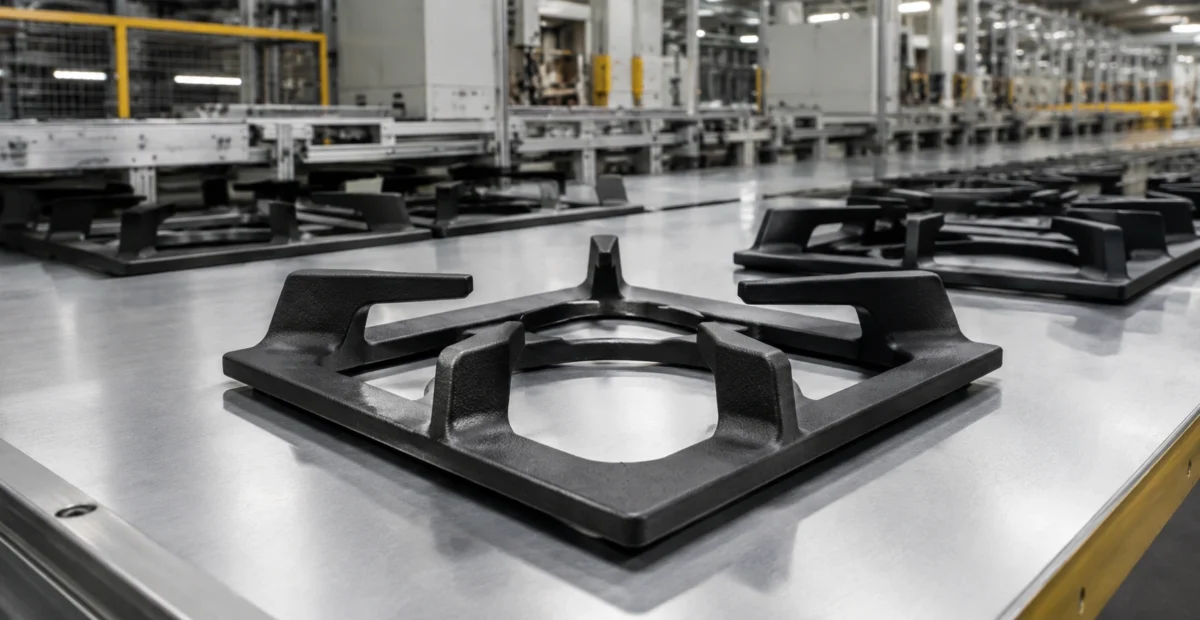
Cast iron is widely selected when a grate needs substantial visual weight, a rigid form and the freedom to create three-dimensional rib patterns. Casting enables integrated features such as supports, feet and structural transitions that can be difficult or uneconomical to achieve through fabricated parts. It also gives designers a recognisable premium, architectural character.
The trade-off is that cast iron requires disciplined design and finishing. Wall thickness, cooling behaviour, dimensional control, surface preparation and coating selection all influence the final part. Because the material has mass, handling, packaging and cooktop compatibility should be considered early. A carefully specified coating and cleaning guidance are also important for long-term appearance.
For a deeper look at design and use considerations, see the cast iron grate guide and the cast iron production overview.
Steel: fabrication flexibility and finish options
Steel grates can be produced through cutting, forming, welding and other fabrication routes, depending on the design. This can make steel attractive for simpler profiles, specific bar constructions or projects where a lighter component is beneficial. The material can also support a range of surface treatments and visual directions when the design is compatible with the chosen process.
A steel solution still needs careful attention to stiffness, joint design, heat exposure and coating performance. Thin sections can save mass but may not provide the same visual or structural behaviour as a cast component. Welded or assembled constructions should be evaluated for consistency, cleaning access and service conditions—not only for initial unit cost.
Decision factors to compare side by side
| Decision factor | Cast iron approach | Steel approach |
|---|---|---|
| Geometry | Well suited to integrated, three-dimensional forms. | Well suited to bars, formed profiles and fabricated assemblies. |
| Visual character | Often used for substantial, premium-looking grates. | Can range from minimal to technical depending on finishing. |
| Mass and handling | Higher mass should be considered in product and packaging design. | Can support lighter assemblies where the design permits. |
| Surface strategy | Requires a coating/finish appropriate to the intended use. | Requires finish and joint protection matched to heat and cleaning exposure. |
| Production decision | Tooling and casting process should match volume and geometry. | Fabrication route should match repeatability, joints and tolerance needs. |
The table is a selection framework, not a material specification. A supplier should review actual drawings, burner layout, expected cookware, finish target and annual volume before recommending a production route.
Heat, stability and cookware contact
Users experience a grate through stability and contact. A pan should sit predictably without rocking, and the support points should make sense for the cookware range the appliance is designed to serve. Material choice influences how the component behaves under cycling, but the support geometry and tolerance strategy determine whether that behaviour translates into a stable user experience.
Prototype testing should therefore include real burner configurations and representative cookware. Teams should check pan placement, cleaning access, grate removal, interaction with ignition components and dimensional consistency after the intended finishing process. Testing a bare sample on a bench is not the same as validating an appliance component.
Finish and maintenance are part of the product promise
A grate is exposed to spills, heat, cleaning routines and repeated removal. The finish should be selected with the expected cleaning instructions and consumer environment in mind. Overpromising “maintenance-free” performance is unhelpful; clear care guidance and a compatible surface strategy are more credible and useful.
Design can also reduce cleaning friction. Smooth transitions, accessible gaps and intentional drainage or debris paths can make routine maintenance easier. These are product-design decisions, not afterthoughts for packaging copy.
Questions to resolve before tooling or procurement
- What cookware diameters and weights must be supported?
- What burner layout and clearance constraints define the grate geometry?
- Which surface appearance and cleaning routine does the product promise?
- What tolerance, flatness and fit requirements apply after finishing?
- What production volume, packaging method and replacement-part strategy are expected?
Answering these questions early prevents the material choice from becoming a late-stage cost argument. It turns it into a coordinated decision across industrial design, engineering, purchasing and quality.
How to work with a manufacturer
The most useful supplier brief includes dimensional drawings, burner layout, desired finish, target market, expected annual quantity, cookware assumptions and any performance test criteria. It should also state whether the grate is a standalone part, one element in a larger support system or a replacement component. With that context, a manufacturer can discuss material, manufacturing method and quality controls on a comparable basis.
Explore Alpha Plus products to understand the available product scope, then contact the team with your design brief for a project-specific discussion.
Frequently asked questions
Is cast iron always better than steel for stove grates?
No. Cast iron and steel suit different geometry, mass, finish and production requirements. The right choice depends on the appliance design and intended use.
Does material alone determine pan stability?
No. Stability depends heavily on support geometry, tolerances, burner layout and the cookware range used for validation.
Can a steel grate look premium?
Yes. Surface finish, proportions, joint design and integration with the cooktop determine the visual result as much as material name.
What should be tested on a prototype?
Fit, pan stability, clearance, removal, cleaning access, finish behaviour and dimensional consistency should be checked in the actual appliance context.
Next step
For a project-specific cast iron or steel grate discussion, send Alpha Plus your drawings, target finish and product requirements. The production route should be selected after the component’s geometry, usage and quality expectations are clear.
Cost should be considered over the component lifecycle
Initial unit price is a relevant procurement input, but it should not be isolated from tooling, finishing, assembly time, packaging, reject risk, warranty exposure and replacement-part strategy. A route that appears inexpensive at the quotation stage can become costly when it introduces inconsistent fit, difficult cleaning, fragile joints or a finish that does not match the intended product promise. Conversely, a more substantial component may be justified when it supports the product position and reduces downstream compromise.
A useful comparison sets the same brief for both alternatives: identical burner constraints, cookware range, appearance target, validation tests and expected volumes. Only then can engineering and purchasing compare the real trade-offs. This approach avoids comparing a fully developed cast component with a simplified steel concept, or the reverse. The selected material should be the result of a documented product decision rather than a late substitution.